
Going back in time
Rollbacks trade small short-term economic gains for long-term resource and ecosystem damage.

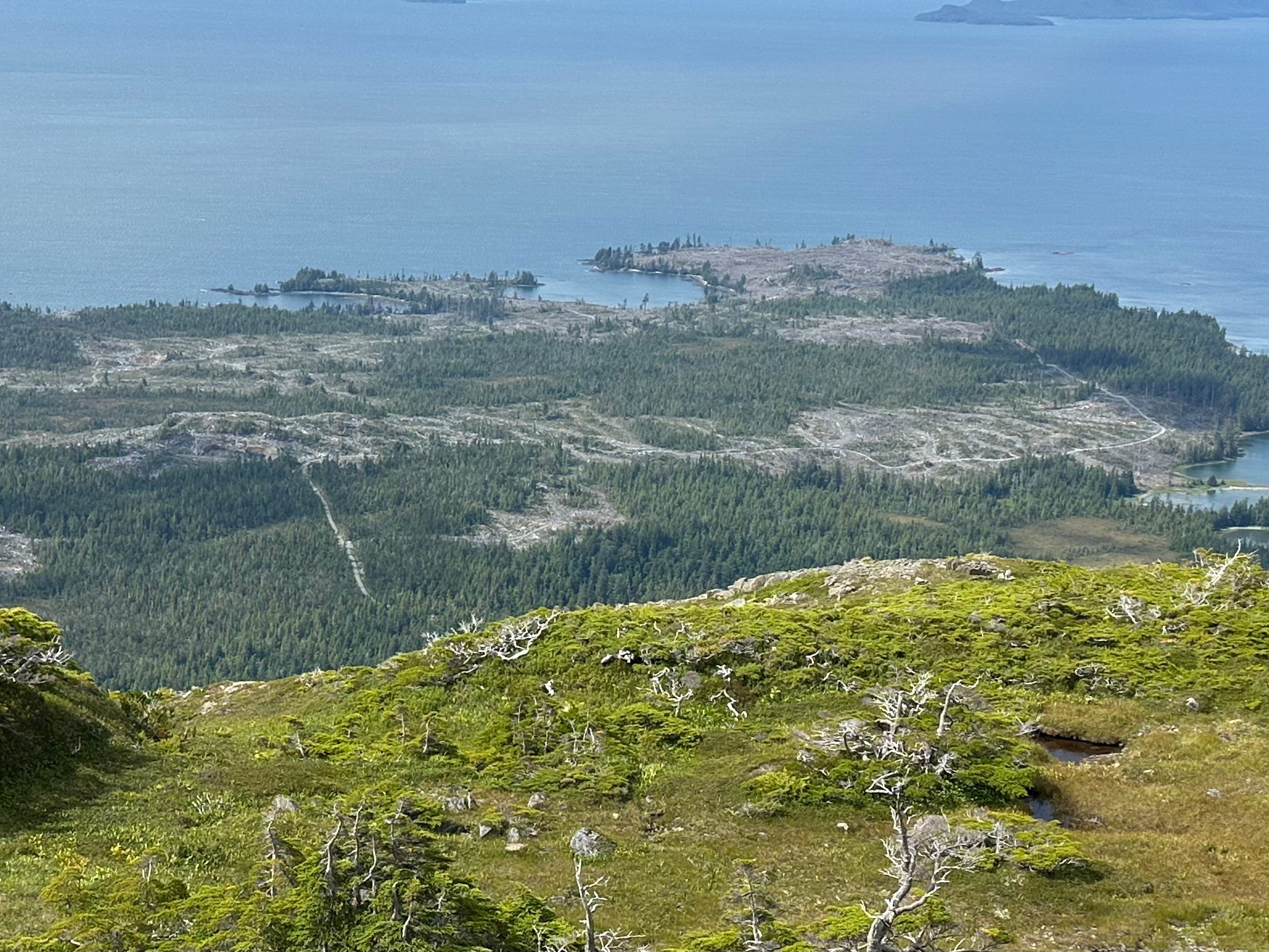
“All of it was well-intentioned. All of it was designed to make the lives of people better. We didn’t know the effects we were having on the environment…we do now.” - Chris Wood
I lived in a home, but I grew up in the woods around Klawock, Alaska, the second largest community on Prince of Wales Island–the third largest island in the United States. By the time I left for college my hometown had started to change though I didn’t really notice. At the same time, Chris Wood (now the CEO of Trout Unlimited) was leading the effort to protect the remaining old growth on my home island. I still haven’t met the man, but I did speak with him for an hour on my podcast. The guy speaks in honest, educated, eloquent soundbites so I recall the conversation often.
I think about three contexts in which his words ring truest — The Roadless Rule, the Ambler Road and the rollback of the Central Yukon Resource Management Plan.
“All of it was well-intentioned”
I had friends whose dads contorted their bodies to hold chainsaws steady while cutting timber or compressed their spines hauling loads of logs on pot-hole ridden, lane-and-a-half wide gravel roads. I remember the smell of grease, gas and sawdust, and their permanently stained hickory shirts, double kneed Carhartt jeans cut off above the ankle held up by suspenders; muscular hands that felt like rough mitts when you shook them. They were men who did brutal, dangerous work and wore exhaustion like I have never since seen but they often maintained enough energy to crack a joke.
The economy of Prince of Wales hummed and people worked and lived with tenacity.
When my family moved to POW in 1986, village corporation land, regional corporation land, state land and federal land were all being logged. Commercial fishing was only starting to taper and lodges were attracting visitors from the Lower 48. The getting was good.
It was the same around the state. Oil revenue and investments made life in Alaska attractive and the state population grew by 35% in the 80s, the biggest percentage growth in the state’s history other than the Cold War military infrastructure build-up in the 1950s and 1960s.
The Trans-Alaska Pipeline was finished in 1977 and over the last 40 years, the Alaska Permanent Fund has grown to over $80 billion even as prices fell. New schools were built around the state and teachers were recruited from the Lower 48 with not only the promise of a big wild life, but a salary and benefits package that inspired families like mine to come and stay.
Cut. Drill. Build. Grow. The frontier and its resources are endless.
“We didn’t know”
The pace was unsustainable.
We logged the easily accessible timber then built expensive roads deeper into the landscape without a plan or funding to maintain them once logging was done. We logged to the edge of creeks and rivers, or left a small edge more for aesthetics than ecological consideration.
Had the 50-year timber lease on the Tongass National Forest been renewed in 1997 and the Roadless Rule not enacted in 2001, what would be left after another quarter century of industrial scale logging? I wonder if we would be in the same position we are now, but without billions of board feet of habitat.
Since I graduated high school in 1999, the POW economy has shifted. There are seasonal jobs, but few year-round careers. Logging is a fraction of what it was. The Forest Service presence has shrunk along with the presence of young families who have to weigh the prospects of adventure against the lack of childcare and long term career potential. School enrollments are nearly half of what they were when I graduated and the money for schools is not keeping pace with inflation.
The fishing is as good as many summer anglers have ever had, but that’s because they weren’t here in the 1980s or 90s. Still, lodges are booked all summer and non-residents who have bought properties drive their own boats up to stay for the summer.
“We do now”
But the solution is not to restore the economy of 1986. Alaska’s current financial crisis was set into motion about the time my family arrived, not with the closing of mills.
Alaska has an incredibly forward thinking system in the Permanent Fund, but it otherwise lacks diversification, and cannot account for decreased oil production or price volatility. Tourism has more than doubled in the last 25 years. It generated over $5.6 billion in total economic output last year but most of that money goes to private companies, not into the state’s operating budget.
Trees are a renewable resource, but valuable old growth doesn’t regenerate quickly, and natural old growth stands feature trees of varying ages and intact ecosystems.
Second growth timber is not nearly as large, or as valuable, and small local mills can’t compete with private companies such as Weyerhauser to provide construction-grade wood fiber from their millions of meticulously managed acres across North America.
Second growth that hasn’t been managed ends up unhealthy, dense and doesn’t provide the necessary forage for wildlife to thrive. Carrying capacity for blacktail deer drops from roughly 18 per square mile to nearly half that and critical spawning habitat for salmon and steelhead has been degraded if not ruined.
These are not new discoveries. By the 1980s the deleterious effects of industrial logging were becoming obvious but by the mid-1990s, it was obvious too that the heyday was over and accessing timber would become cost prohibitive.
We also know what worked. While areas of Southeast Alaska continued to suffer under the effects of decades of industrial logging, studies were showing that caribou on the North Slope were impacted by construction and oil field infrastructure on the Haul Road, but coexistence was tenuous but possible. Security measures were relaxed and the Haul Road was opened to the public in 1994. The Central Yukon Resource Management Plan allowed for recreational and subsistence use as well as responsible development. The CYRM was updated in 2024 using science and insight from locals. It provided guidelines and a sustainable path forward for all user groups. We used what we knew to guide decision making.
We know that contamination along the Dalton Highway has been minimal though the presence of PFAS chemicals near Pump Station 4 warrant consumption advisories for anglers but no fish in no area reached “do not eat” status.
But the push to rollback protections and trash the CYRM ignores what we know and creates an uncertain future that many fear will result in unchecked development. While the Haul Road is often cited as an example of why the Ambler Road can be built safely, we know it’s not an apples to apples comparison. The Dalton Highway should not validate the Ambler Road and Red Dog mine shouldn’t either.
We know from studies at the Red Dog mine that extracted ore contaminates habitat while it’s being trucked. Zinc, lead and cadmium are dispersed as “fugitive dust” that has contaminated the 55-mile road haul road from the mine to where it is shipped. This is especially disturbing because the Ambler Road would be 211 miles to the Dalton Highway and would require nearly 3000 stream and river crossings. From there the ore would be trucked another 270 miles south to Fairbanks. The Ambler Road would have considerably more big rig traffic since all of the ore would be trucked out unlike oil on the North Slope that has a pipeline to transport the resource.
Alaskans have been compensated (fairly or not) for the oil footprint. Earnings from the Permanent Fund supply the bulk of Alaska’s budget. But it’s foreign mining companies that will benefit from the billions of dollars in minerals along the proposed Amber Road that will be shipped overseas to be processed. There will be localized economic benefit and some local jobs, but cooperative efforts between user groups have proven to be positive and less destructive.
Will we learn?
Loggers are not villains; those who work at mines aren’t either. Organizations like TU, Backcountry Hunters and Anglers and the Teddy Roosevelt Conservation Partnership aren’t special interest groups who keep the dollars flowing with unreasonable vilification and self-importance. They champion the freedom of people to enjoy the resources on public land and have a say in what is done with public land. It is a mistake to alienate people “on the other side” because many are willing to work together for better outcomes.
Going forward we know that solutions can’t be partisan and the whiplash caused by the whims of those in Washington, D.C. doesn’t help Alaska residents.
I don’t want these wild places to remain because I have the money to fly out to them annually. I want them to remain because I can’t possibly see it all and that is reassuring. I don’t want to support a foreign mining company’s project hoping that one day the Ambler Road is open to the public, especially knowing that years of fugitive dust has contaminated the water, impacted the fish and cut through, then driven off, the caribou herd.
Part of my lifestyle is in the wilderness, the other needs buried resources so I can punch these words into a computer. Massive data centers to facilitate our technological needs will be the death sentence for ecosystems around the globe. I am contributing to the destruction of the very thing I want to save. These are messy juxtapositions.
But conservationists don’t believe we can live in a world without logging or mining. We also know the answer isn’t unchecked environmental destruction for sort-term monetary gain.
We know we are smart enough to come up with better solutions.