

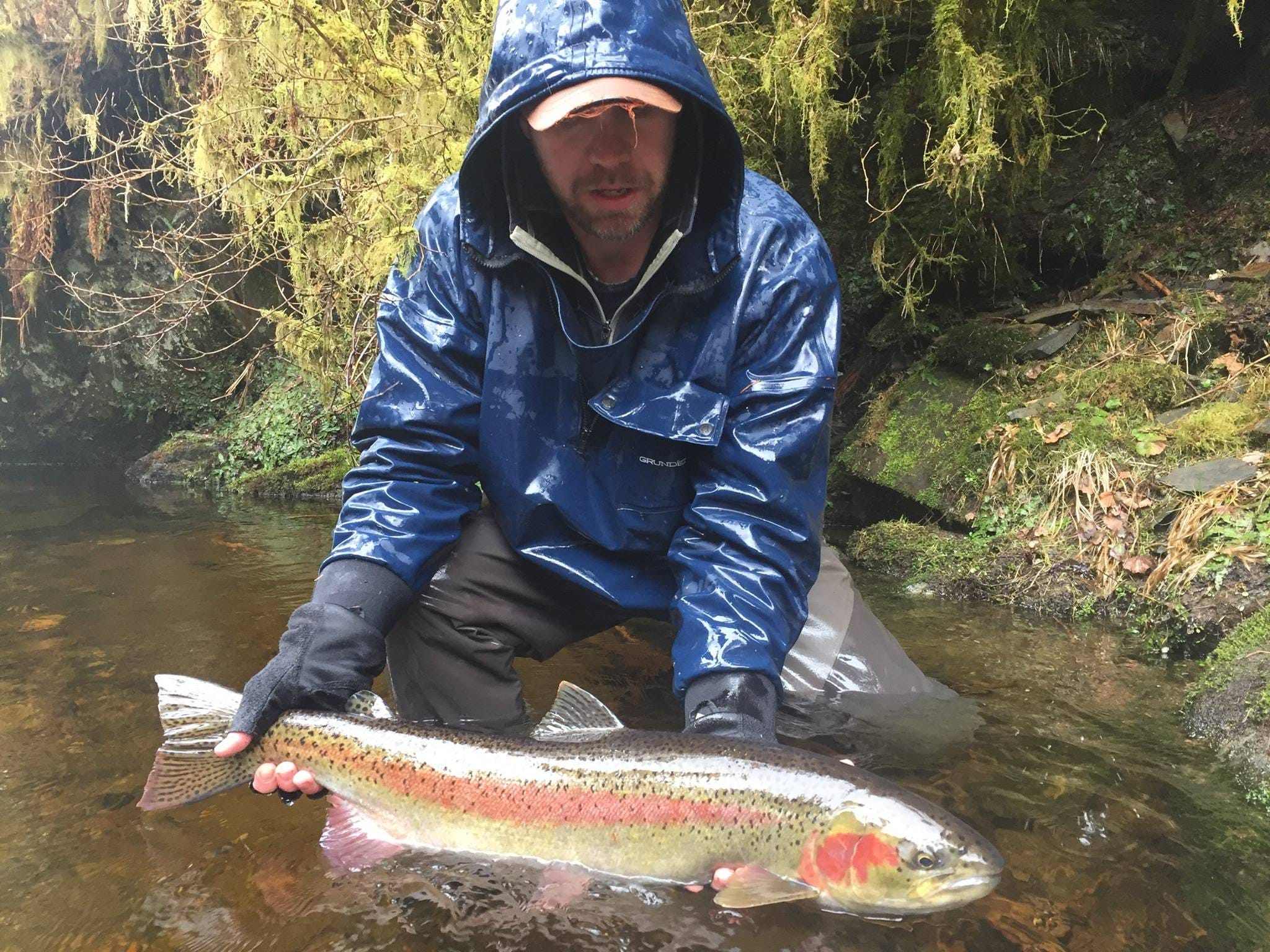
If you’re lucky enough to put wet hands on a steelhead, time moves faster. Fingers become dull and red, then purple and numb. You could sit under a tree and warm up, but that’s not where the fish are and being at least a little uncomfortable is a prerequisite for steelheading. Steelhead fishing is not generally described as a volume fishery experience, but good days can become great, so you keep casting. You’ll deal with cold hands later.
As a boy I grew up riding my bike to a river with more fish than I knew what to do with. Trout. Dolly Varden. Salmon. Steelhead.
Nature has always been important in cultural rites of passage, providing kids the opportunity to discover their place in the world, build confidence, then return to their community able to contribute. I don’t remember the first time I was allowed to ride to the river by myself, but I know that freedom and confidence forever changed me.
As an adult, my angling concerns go beyond fly selection and hook sets, to the future.
In 1947 the US Forest Service accepted a bid for a 50-year timber sale and in 1954 the Ketchikan Pulp Mill opened brought a substantial boost to the economies of Ketchikan and outlying areas. As the 50-year term came to a close, the reality of “renewable” started to become more clear. Accessing old growth stands was expensive and second growth forest was yielding lower-quality timber so the contract was not renewed and the pulp mill closed in 1997.
The Roadless Rule was enacted in 2001 and prohibited the building of new roads to protect remaining old growth stands. This latest action to rollback protections on the Tongass and allow new roads (funded by taxpayers) to reach new old growth timber stands is troubling.
As a boy I saw the devastating impact of a crippled timber industry, but also the rise of the sport fishing and recreation industries. In a world of was, the Tongass, for the most part, still is. I see the remnants of an attitude of dominance over nature but also resilience every time I fish. Some creeks have never recovered from the logging of the 1970s and 1980s when the buffer between a logged hill and stream was sometimes a little as a row of trees, trees that were eventually blown into the river.
My wife and I often discuss where we’d like to travel to fish and have accepted we’ll likely never have the steak and red wine lunch on a river in Patagonia or afford a week in Bristol Bay. But we’ve got the Tongass. Our nine-month old has already walked past second growth that grips the stumps of the previous generation and around the trunks of massive old growth. I am worried about what will be left for her even if the Roadless Rule stays in effect.
It’s not a surprise that Southeast Alaska is the last stand of phenomenal steelhead fishing. Smaller rivers tucked into difficult to access coves and bays protected native fish from development and use. But not all. Some runs of fish have survived extreme insult yet hang on out of tenacity and just enough restraint and conservation-minded practices.
One of the defining characteristics of the American experience is the value put on accessibility to wild landscapes and the right to use the land. A tycoon and teacher can both chase steelhead on the Tongass. Yes, we need minerals for cell phones. Yes, a third of America is still covered with forests yet the United States is the No. 1 importer of lumber in the world.
But we need wild spaces too and nothing speeds the clock on natural resources and wild fish populations like consumptive development that sacrifices one resource for another.
A version of this piece appeared in the summer 2025 issue of The Drake.