

I texted Lou Tamposi to tell him I was adopting his method of sitting and waiting.
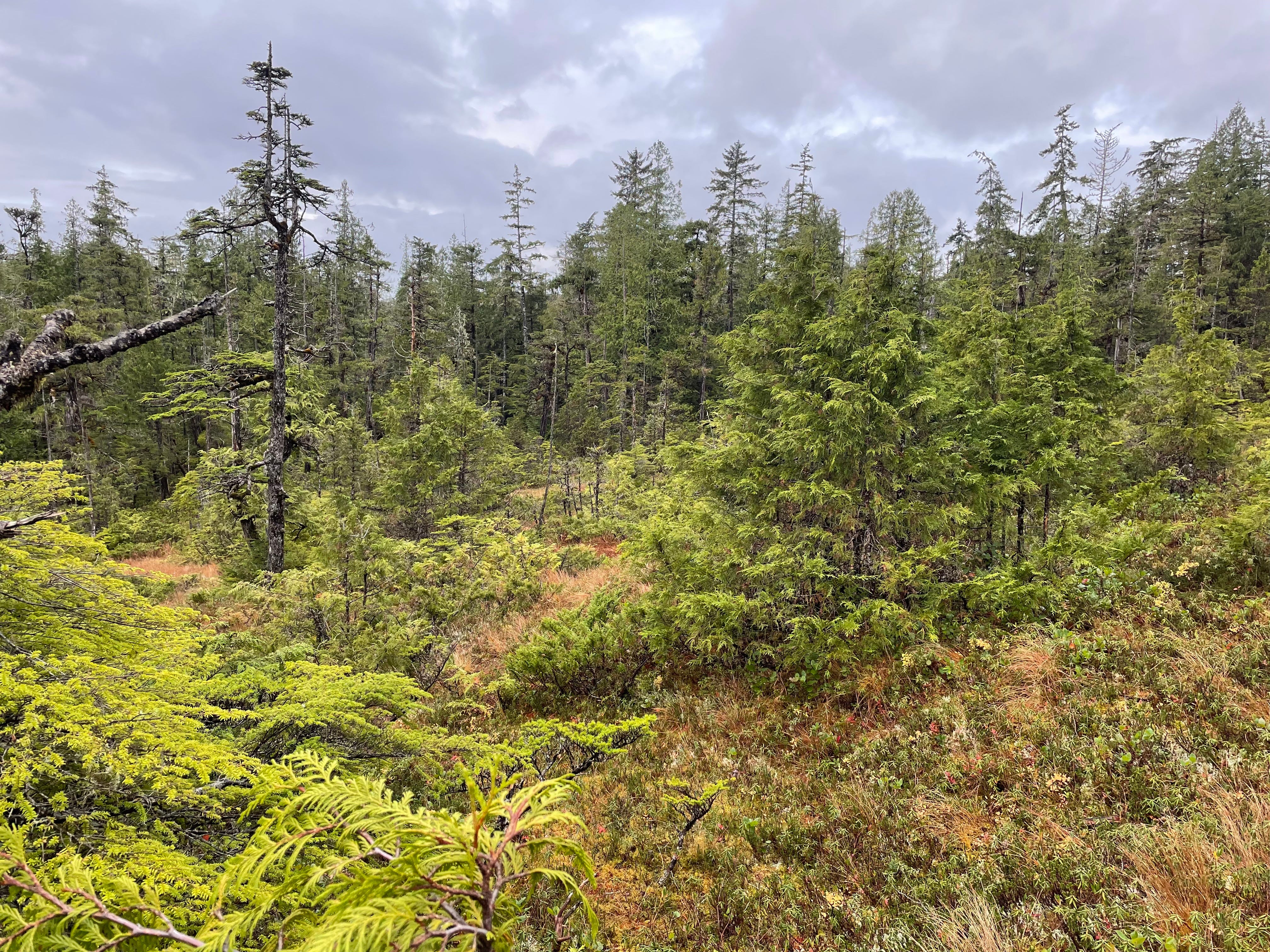
It was a bit of a joke because Lou is in Massachusetts and he hunts whitetail on a 20-acre chunk of land while I pursue Sitka blacktail on an island in Southeast Alaska that is 1062 square miles of mostly public land. It’s a staggering amount of habitat unhemmed by fences or asphalt. It makes sense that he’d be stuck in a tree, waiting. It seemed silly that I’d limit my movement and be completely dependent on using a deer call.
I gained 1000 feet in elevation to reach my spot on the edge of the muskeg, so though it was 46 degrees and rainy, I was sweating and my Grundens rain gear retained both heat and moisture. After a half hour I was chilly. By the hour mark, my feet were numb and I could hardly tense my lips enough to get a clear sound on the call.
I abandoned still hunting and kept moving up the mountain, mostly to get warm, but also to find a buck willing to respond. I returned home four hours later, having not had an encounter with a buck or doe. Hunters in Southeast rarely need to hike up a mountain to mid-elevation muskegs since plenty of bucks descend this time of year but I figured my willingness to work harder would make the difference. It didn’t.
What happened? It’s complicated and can’t be reduced to simply right or wrong. It’s more the product of variable soup with three key ingredients.
Population
The carrying capacity in quality habitat in southern Southeast Alaska is 20-25 deer per square mile, or roughly half that in poor second growth habitat with same-age timber and limited forage.
***For what it’s worth, the population densities of deer around Ketchikan, Alaska, are similar to that of where Lou hunts for whitetails in Mass. There is no need to address this further. It is simply a stat worth noting.***
Areas close to town or within a short skiff ride tend to be second growth and highly pressured which knocks down the population, and keeps expectations reasonable.
I have a rough idea of what an acre looks like, so as I plan my hunt, I think about how many bucks I will be hunting. If there is a chain of muskegs roughly a mile long, that will likely end up being more than a two mile loop. The math suggests that I will be hunting more than one buck. With that in mind, I should get the feeling that if nothing responds in the first muskeg, once I move into the transition toward the next one, I have left the area of one buck and have entered the domain of another.
Another population variable this time of year is the obvious consolidation brought on by rut. Where there’s a doe, there has to be a buck, so seeing fresh sign and tracks assured me that I was in an area with at least a couple deer.
Over the course of my hunt Saturday, I probably sent my calls into an effective range of 90 acres. I have little doubt something heard.
Pressure
It is easy to be a great hunter in a high density location with little pressure. The shout out will go to the call, the gear, the cartridge, whatever, but the most important variables were probably animals per square mile and the fact they were able to act naturally.
Great hunters are the ones who can sense which tactic to employ or modify as they have stockpiled enough experience to get those feelings, those intuitions, and can stay focused for their entire time afield. They don’t need the advantage of hunting premium habitat with high population densities. But they happen to live near it anyway, so good on them.
In high traffic areas, I’ve seen bucks running in the opposite direction from a guy marching through a muskeg, wailing on a call. I’ve heard of people stumbling into bucks who weren’t receptive or even curious. In these areas I am suspicious of people who claim bucks came to a call. Maybe “came to the call” is a euphemism for “stared directly into my lights.” But I won’t waste time being too cynical.
Pressure isn’t the only variable that makes bucks more elusive than they would otherwise be. I tend to capture the most compelling bucks just before sunrise and just after sunset on my game cameras, so it’s not the middle of the night like many of us think. I have often looked outside at a full moon and declared the next day would be a disaster because the deer were probably running all night. This may or may not be true. Regardless of movement habits, deer that are pressured are certainly less curious or tolerant about unnatural sounds and movements.
Calling
There was likely a buck or two I didn’t see today that wouldn’t have been coaxed out by any call no matter how many Facebook likes it has. Conversely the guy who tagged a mega 4x4 may have simply stumbled upon a buck that would have responded to any call, bleat, grunt or rattle. There was a buck and it was responsive. It may have been more responsive to a particular call, but observant hunters find bucks that simply turn their heads while still bedded. That’s all the response they need from a buck to tag it.
If we go back to the carrying capacity numbers, good habitat is likely not only to hold deer, but hold one that is willing to respond to a call.
As far as a standard deer call goes, it’s difficult to tell which is better than another. Like your favorite fly, it won’t make it into the box of someone else who fishes the same water and catches just as many fish.
An honest assessment is not possible in hunting. There are too many elements of the experiment that can’t be tested.
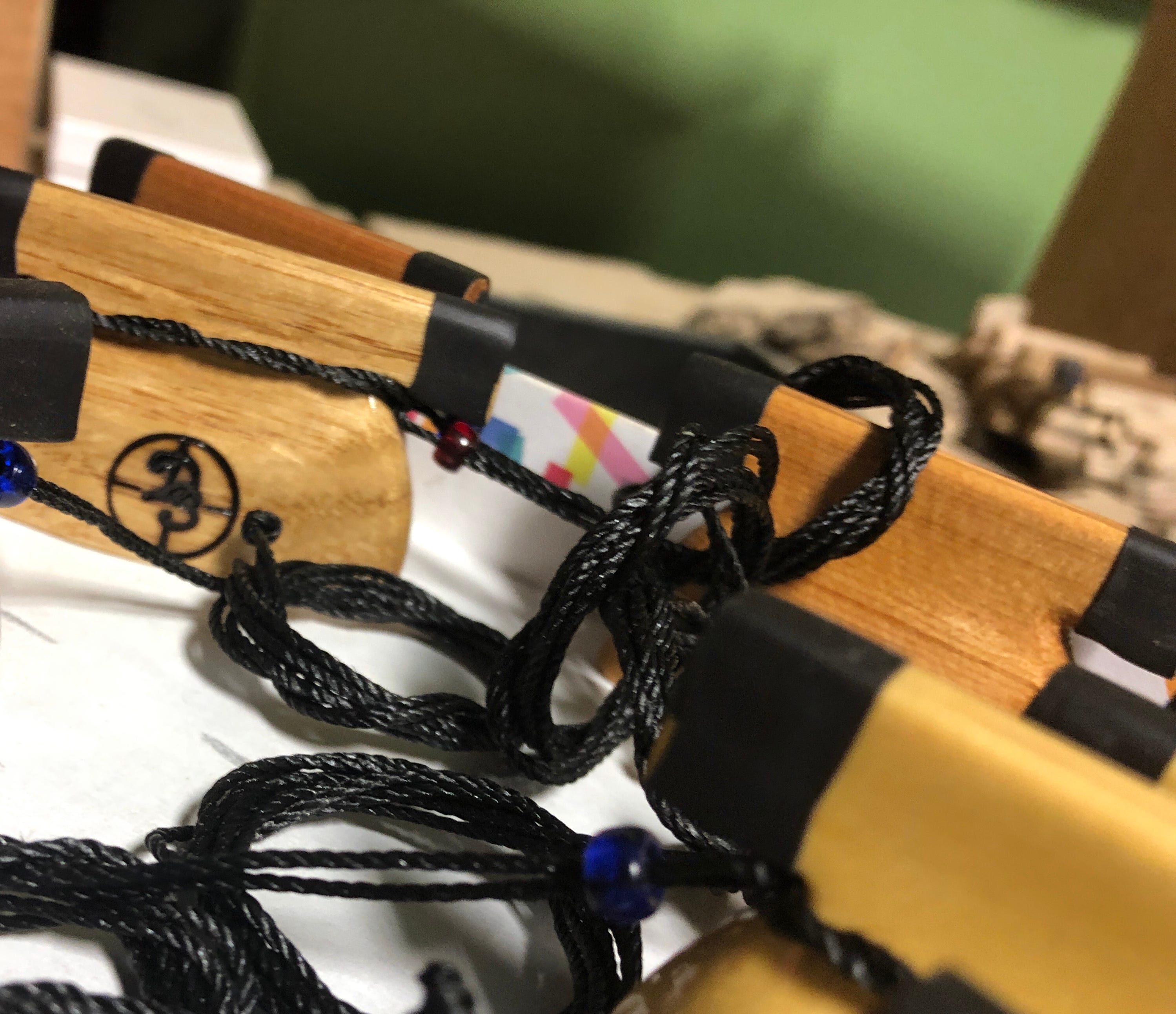
I will say that the Drop Shot call is made by brothers who understand music wood because they sell it. The dense nature of old growth Sitka Spruce is used by Steinway to make pianos worth the annual salary of a teacher. So a deer call made out of that level of wood quality, assembled by guys who are meticulous about quality and pitch, is going to be better than a cheaper one that’s mass produced for a side hustle. The Drop Shot call is able to produce a clean sound even when wet, as well as soft, authentic sounds that cheaper calls made from cheaper wood cannot.
But even then, it’s likely that population and pressure make more of a difference than whether I paid $45 for a cheaper call that hardly words in the rain, or a Drop Shot call that will become a heirloom.
Breaking down these factors is not to disparage or “must be nice” the people who live near strong populations, it’s more to remind myself not to be too crestfallen after hunting the habitat available to me. Habitat that might be marginal to good rather than exceptional. Maybe I didn’t do anything wrong.
Sometimes, most times, the deer win. That’s good.
Ha! I was thinking about you this morning sitting in my "enormous" 492-acre piece. Except, that since it's a limited hunting reservation, I only had about a 50-acre portion to hunt. And they only allow fixed stands. So I might as well have been hunting 250 square yards.
I was also thinking about "calling in" bucks. My current thesis is that we whitetail guys try to do it for the same reason you get up and move -- it makes us feel like an active participant in what ultimately comes down to patience, preparation, woodsmanship, and luck.
Still found myself tooting away on my grunt call.
Still didn't see any deer.